Search This Website

Showing posts with label REVIEWS. Show all posts

Friday, 26 January 2018

1More Triple Driver In-Ear Headphones Review

Image result for Triple Driver In-Ear Headphones Review

The 1More Triple Driver In-Ear is priced at Rs. 8,999


1More has established itself as a serious contender in the audio space over the years. Its product portfolio isn’t very vast, but the few products we’ve tested have turned out to be really good. Today, we’ll be testing 1More’s highly acclaimed Triple Driver In-Ear, which is currently one of its most expensive offerings in India. This pair of headphones boasts of having three different drivers inside each earbud for higher fidelity audio.

The price tag of Rs. 8,999 puts it in the premium segment as far as wired headphones go. It's time to put the Triple Drive In-Ear to the test to see if the hype if real.

1More Triple Driver In-Ear design and features

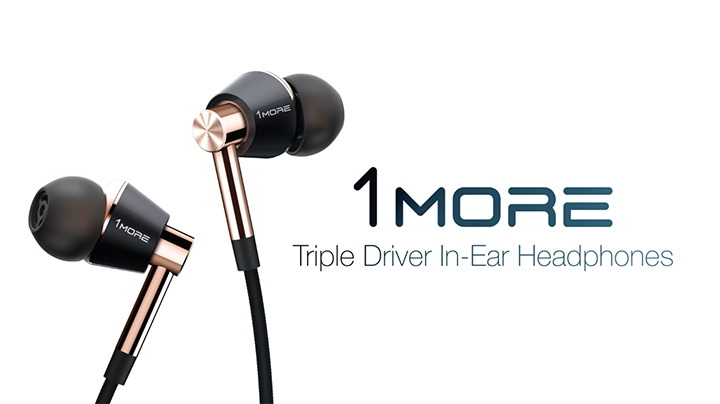
The headphones look great and are snugly packed in a rather large box. The cable is sufficiently long (1.25m), and according to 1More, is made of an enamelled copper wire with kevlar fibre for increased durability and strength. The soft rubber lining of the cord is exposed from the Y-splitter to the earbuds, while the lower portion has nylon braiding.

The casings of the earbuds are made of metal and sit at slight angles when you wear them so they rest more comfortably in your ears. More than comfort though, 1More says this angle was chosen to increase sound isolation and improve quality. Inside each casing, there are two balanced armature drivers and one dynamic driver. The latter is said to use aerospace-grade material in its construction. Despite squeezing in three drivers, the Triple Driver In-Ear's casings are surprisingly compact and relatively inconspicuous when you wear them. We didn’t find them too heavy either. There is an in-line remote control, which houses the microphone for calls and three buttons for controlling music playback.

Image result for Triple Driver In-Ear Headphones Review


The 1More Triple Driver In-Ear boasts of an impressive frequency range of 20Hz to 40,000Hz, and an impedance rating of 32Ohms, which is decently low considering the number of drivers inside. 1More’s website claims that the Triple Driver In Ear is the world’s first pair of THX certified headphones. The headphones are available in black and titanium (which we have with us).

Coming to the packaging itself, it's pretty fancy and you get a couple of premium-looking accessories inside. On the flap of the box, we have some sketches of the process that went into designing the headphones, along with a message from Luca Bignardi, a Grammy-award-winning sound engineer who supposedly helped tune them. Flipping over the layer which has the headphones themselves, we have all the accessories which are boxed individually. The carrying case is a hard-shell box with a magnetic flap and a leather-like texture.

Next up, we have a dual-prong airplane adapter for using your headphones with in-flight entertainment systems. The same box also has a metal shirt clip for the cable. There’s a separate box just for the manual and a mini 1More product catalogue. Finally, the tallest box in the package houses the eight extra pairs of eartips that come in addition to the ones already on the earbuds. There are six sets of silicone tips in different sizes, and three sets of foam tips. All the accessories are high quality and feel premium.


1More Triple Driver In-Ear Headphones performance

We tested the 1More Triple Driver headphones on a range of devices including the LG V30+ , Apple iPhone 6s Plus , and a MacBook Air. We used an assortment of media ranging from online streaming to high-resolution FLAC files. We put the headphones through a short burn-in period too using 1More’s own Assistant app. Focus tracks for this review were In The Closet by Michael Jackson, Coming Back To Life by Pink Floyd, and Reminder by The Weeknd.

Image result for Triple Driver In-Ear Headphones Review

In The Closet is quite a complex track with a lot going on in the mid-range, along with heavy bass notes. With the FLAC version of this track, the Triple Driver In-Ear managed to deliver very good separation between the multiple instruments and the sound effects that are sprinkled intermittently throughout the song. Bass response was punchy and to the point. We were easily able to hear minute nuances, which would otherwise have been lost.


In Coming Back To Life, the electric guitar riff at the beginning sounded sharp and bold. Vocals were once again crisp and were placed front and centre among all the instruments. High frequencies were handled with precision thanks to the balanced armature drivers doing most of the heavy lifting, while the dynamic driver provided a subtle amount of bass throughout the track.


We chose Reminder mainly for its heavy bass, which sounded punchy and tight. There was good control here and we never found the bass overpowering the other notes or vocals at any point in the song, even with the volume turned all the way up.


Listening to the same tracks in FLAC using all our different test devices showed that the quality of the source really matters with the 1More Triple Driver In-Ear headphones. The quad DAC feature of the LG V30+ didn’t seem to make a significant difference to the audio quality, compared to listening to the same songs on a more budget-friendly smartphone such as the Samsung Galaxy On7 Prime. We did notice a small difference in the mid range, and the bass was a bit more controlled, for the most part, it was hard to distinguish them. Music streamed from the Internet sounded good too, but you won’t be doing the headphones justice unless you're streaming high-resolution files.


The silicone ear tips offer a good fit but we found the foam ones to be more comfortable, and they even offer better isolation against ambient noise. However, there is audio leakage at high volumes, and so whatever you're listening to will be audible to those around you. On the comfort scale, we didn’t have any issues with fatigue even after listening to music for over an hour.


Voice calls were handled well, and the buttons on the in-line remote have good tactile feedback. The headphones also do a good job with other forms of media such as movies, which sounded balanced and engaging in our experience.

Image result for Triple Driver In-Ear Headphones Review

Verdict
The Triple Driver In-Ear from 1More manages to live up to the hype surrounding it. This pair of headphones produces balanced and detailed sound. It's good with pretty much any genre of music thanks to the two balanced armature drivers tackling the high and mid-range frequencies, while the bass is left to the dynamic driver. Its market price of Rs. 8,999 is a bit on the high side when compared to the typical price in other countries, but isn't too bad in terms of value. This pair of headphones is easy to drive with any decent portable device thanks to the relatively low impedance rating. Build quality is also very good, and you get a lot of accessories in the box.

If you do spring for the 1More Triple Driver In-Ear, then rest assured, you won’t be disappointed. Just make sure you have some high-resolution audio sources to get the most out of it.
Price (MRP): Rs. 8,999
Pros 
  • Balanced sonic signature
  • Detailed highs and mids
  • Well built
  • Good bundle
Cons
  • Audio leakage at high volumes
Ratings (Out of 5)
  • Design: 4.5 
  • Performance: 4.5
  • Value for Money: 4
  • Overall: 4.5


Wednesday, 24 January 2018

Samsung Galaxy A8+ Review

Image result for Samsung Galaxy A8+ Review


Nearly a year after the first smartphones with 18:9 screensdebuted at MWC 2017, nearly every manufacturer has jumped on board. This kind of design started out as a novelty, quickly became trend, and is now pretty much a mainstay of smartphone design. It isn't any surprise, since this is the first time in a very long time that phones have looked any different, and people do feel like they're getting something better and more modern. Phones with 16:9 screens, (and heaven forbid, actual buttons on the front) do now seem old-fashioned.

Samsung gained an early lead with its Galaxy S8 and Galaxy S8+ at the beginning of last year (though it went with 18.5:9 which it calls "Infinity Display") and then released the Galaxy Note 8 six months later, but didn't seem think the rest of its range deserved the update. Meanwhile, its competitors were clambering over themselves to make sure they didn't fall behind the curve. Over this past year, we've seen dozens of new 18:9 phones launching across the price spectrum. The most notable example of that is OnePlus rushing to replace its barely five-month-old OnePlus 5 with the OnePlus 5T , just to make sure it didn't cede even the slightest ground to its competitors.

That makes today's review subject all the more interesting - the new Galaxy A8+ (2018) is Samsung's first non-flagship phone to be graced with an Infinity Display, and it's priced to go right up against the OnePlus 5T. Is Samsung too late to the party, or has it been worth the wait? We're about to find out.


Samsung Galaxy A8+ (2018) design

As its name suggests, this is one large phone. Samsung hasn't launched the smaller Galaxy A8 (2018) in India, which is a pity, because the A8+ (2018) can be a bit of a handful. It's relatively thick and heavy at 8.3mm and 191g. That weight also feels unbalanced, especially when typing, which requires you to hold the phone from close to the bottom. It will stick out of many pockets and generally make itself felt wherever you try to stash it.

Samsung has listed two colour options for this phone, black and gold. We had a black unit for review and with the removal of buttons from the front face, it looks really plain and monolithic. The front and back are both shiny glass, though only the back curves around the matte black metal frame. While some might like this look, others will prefer the gold version which has a black front face and camera module providing a bit of visual relief.

The front face is broken only by the earpiece and dual front cameras right near the upper edge. When the phone is on, Samsung's Always-On Display readout is splashed across the screen, taking advantage of the sAMOLED panel's ability to selectively light up pixels without consuming a lot of power. By default, there's a large clock, the date, the battery level, and four icons representing your most recent notifications. You can choose different clock styles and hide other information, or only enable the Always-On Display between hours of your choosing.

The power button is on the right, and the phone's single mono speaker is positioned right above it - an unusual position, but one that Samsung has been using on multiple models of late. On the left, there's a volume rocker and a tray for the primary Nano-SIM. The second Nano-SIM as well as a microSD card fit in another tray that slides into the top. There's also a USB Type-C port and a 3.5mm audio socket on the bottom. An advantage of the all-black look is that the antenna lines are barely visible.

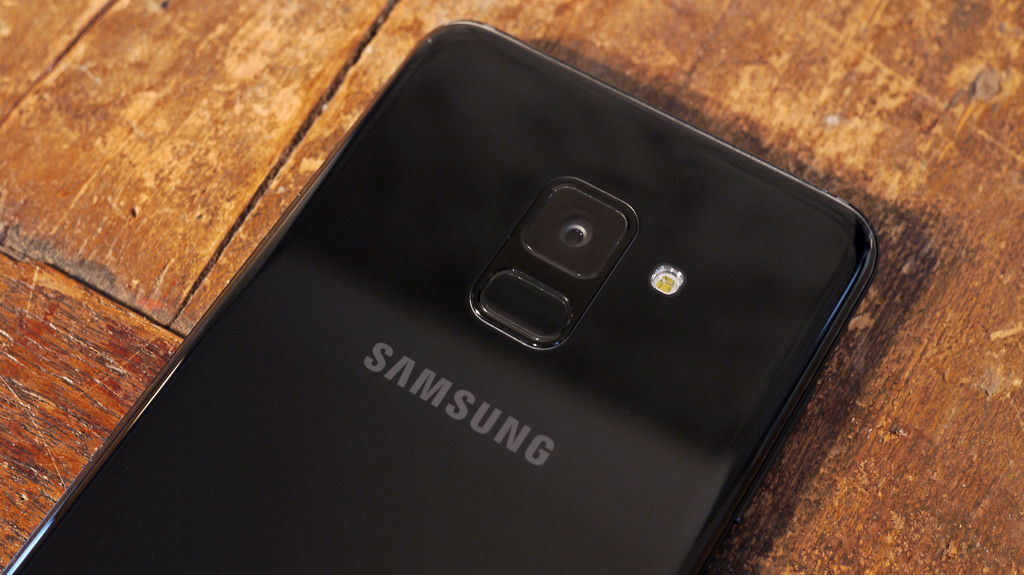
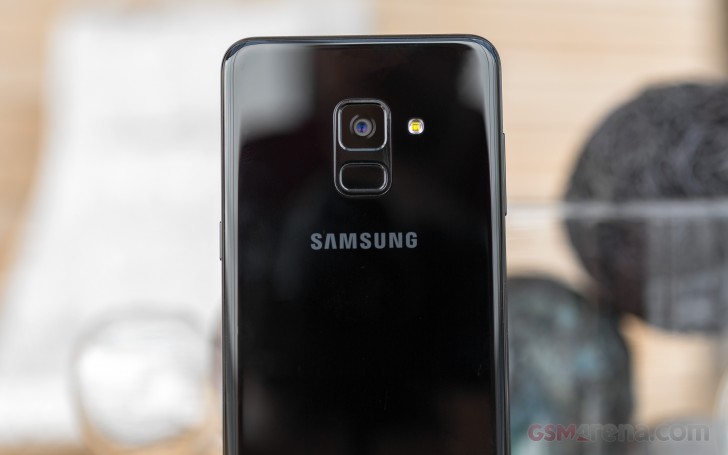
The primary camera is in the upper middle of the rear, with a single-LED flash to the side and small, rectangular fingerprint sensor right below it. Unusually for phones these days, the camera doesn't protrude at all. There's a surprisingly subtle Samsung logo lower down, and some barely visible regulatory text at the bottom.

One feature that we're always happy to have is weatherproofing, and the Galaxy A8+ (2018) is certified IP68 for water and dust resistance. The SIM trays are flanged with rubber to prevent ingress. However, there’s no mention of whether the display glass is reinforced, which is concerning.

Samsung's Galaxy A-series phones are meant to be more affordable versions of the current reigning S-series flagships, in this case the Galaxy S8 and Galaxy S8+. The Galaxy A8+ (2018) inherits many of their design cues, but it doesn't look quite as slick or refined. It's a bit too bulky and awkward to handle, and in fact it more closely resembles last year's Galaxy C9 Pro. In fact, with its pricing and specifications, it serves the same market. In terms of look and feel alone, it doesn't really stand out compared to the competing OnePlus 5T or Honor View 10 (Review) either.

Related image

Samsung Galaxy A8+ (2018) specifications and software

Samsung usually plays it conservatively with specs outside its flagship tier, but with this launch, it's hoping to take on upstarts like OnePlus and Honor. The Galaxy A+ (2018) uses Samsung's brand new Exynos 7885 SoC, which has two high-speed 2.2Ghz ARM Cortex-A73 cores and six supplementary 1.6GHz Cortex-A53 cores, plus an integrated ARM Mali-G71 GPU. There's 6GB of RAM, and the only Samsung phones to ship with so much before now have been the Galaxy Note 8 and the aforementioned Galaxy C9 Pro.

You get 64GB of storage, of which about 51GB is available to users. MicroSD card support goes up to 256GB. Because of Samsung's unique 18.5:9 aspect ratio, the screen resolution is 1080x2220, giving you a tiny bit more height than the 1080x2160 that you get at 18:9. It measures 6 inches diagonally but the corners are rounded for aesthetic purposes, so you lose a tiny bit of screen space.

The Galaxy A8+ (2018) also features dual-band Wi-Fi 802.11ac, Bluetooth 5, NFC, GPS, and 4G with VoLTE. There's a rich complement of sensors, including a barometer and gyroscope in addition to the standard ambient light and proximity sensors. The battery comes in at 3500mAh which is the least we'd expect for a phone this large. Fast charging is supported, but not wireless charging.

This phone and its smaller siblings are Samsung's first to feature dual front cameras. There's one with a 16-megapixel sensor and another with an 8-megapixel sensor, and both have f/1.9 apertures. The rear camera is a 16-megapixel unit with an f/1.7 aperture. Surprisingly, video recording tops out at 1920x1080. There's also no optical image stabilisation for any of the cameras.

Image result for Samsung Galaxy A8+ Review

Samsung ships the Galaxy A8+ (2018) with Android 7.1.1 which is disappointing in 2018. The Samsung Experience skin on top is beginning to get as bloated as the company's reviled TouchWiz UI from years past. At first boot, we were allowed to choose which Samsung apps we wanted installed. We were happy to ditch Samsung Email, Samsung Notes, and Samsung Internet Browser, but there was no way to know what exactly Samsung Connect and Samsung Members are. Samsung Voice Recorder and Samsung Pay are optional apps.

On the home screen, there's a giant My Galaxy widget showing off the phone's various features and advertising services such as ordering a meal or taxi and paying bills. You need to sign up with your phone number, but when we tried it we didn't receive the required one-time password by SMS for hours. You have to register for My Galaxy if you want to be able to find a phone service centre and book an appointment, or chat with tech support.

Samsung's Bixby voice assistant takes up a page to the left of the first home screen and requires you to create a Samsung account which is a separate process. Interestingly, the Galaxy A8+ doesn't get Bixby as a voice assistant - you only get reminders of your upcoming calendar appointments and panels for things like the weather and news. There's no Bixby key on the side of the phone, and long-pressing the Home button brings up Google Assistant (or S-Voice if you choose) so Bixby as a feature isn't the same as it has been advertised on Samsung's flagships.

There's more bloat around every corner - Samsung has tried to transform even the humble Contacts app into a social network with sharable status updates and profile pictures. The Samsung Gallery creates "stories" and multiple apps want you to use a "customisation service" which collects your stored contacts and tries to determine which people you are closest to, for undefined reasons. Opera Max and a bunch of Microsoft apps are preinstalled, and can only be disabled but not removed. The default system keyboard is customisable in many ways and supports transliteration into Hindi, Tamil, and Telugu which could actually be useful.

In the Settings app, you'll find options to manage the full-screen scaling for apps that can't handle it natively, the on-screen Android navigation buttons, fingerprint sensor gestures, a one-handed mode, "Dual Messenger" apps (cloning apps to allow you to use multiple accounts), Samsung Cloud syncing, and split-screen multitasking.

Image result for Samsung Galaxy A8+ Review

Samsung Galaxy A8+ (2018) performance, cameras, and battery life

The Galaxy A8+ (2018) has some powerful hardware and for the most part it runs without any problems. Large games load quickly, and the phone doesn't get too warm at any point. However, there were tiny hiccups on rare occasions, when we felt the UI behave a little sluggishly or touch input didn't seem to register. Hopefully, periodic software updates will iron these kinks out, because usage was otherwise perfectly fine.

Image result for Samsung Galaxy A8+ Review

Samsung's new mid-range processor is fairly powerful, and delivered scores of 78,359 in AnTuTu, 5,192 in PCMark Work 2.0, and 1,525 and 4,349 respectively in Geekbench's single-core and multi-core runs. 3DMark's Slingshot test gave us 1,069 points, and GFXBench's T-rex test ran at 31fps. We can definitely see that this phone isn't on the same level as the similarly priced OnePlus 5T and Honor View 10, but it should still be able to handle most apps and games without any problems.

The Infinity Display doesn't look quite as "infinite" on this phone as it does on Samsung's flagships, because instead of glass curving around the sides of the phone, there are still distinct edges. Even so, it's immersive and vibrant. Brightness isn't a problem even outdoors, and all kinds of content look pretty crisp and enjoyable. The odd placement of the speaker turned out to be a good thing, because it's hard to block when holding this phone in any orientation and it doesn't get muffled with the phone lying on soft surfaces. Sound is loud and voices are clear, but music comes out a bit too harsh for our liking.

One feature of the Galaxy A8+ (2018) that Samsung is promoting heavily is face recognition. This isn't the same as the iris recognition feature on Samsung's top-end phones, but is much more like what you'd get with the OnePlus 5T. In our experience, it just didn't work well, either failing completely or taking more than five seconds to unlock the phone every time we tried it. This was despite trying to enrol our faces multiple times to account for poor lighting or angles. There's an option to make recognition quicker by reducing the security threshold, which we obviously do not recommend.

The camera app has stickers (some of which are live and animated with sound), filters, and Bixby Vision for object and place recognition. It isn't immediately clear how you're supposed to switch between the two front cameras - there's a Live Focus mode shortcut right within the viewfinder which lets you take shots with background blur, and then there's a Wide Selfie mode in the hidden menu that you have to swipe right to see. In both cases, there doesn't seem to be much of a difference in the composition of frames when using the secondary camera. In Wide Selfie mode you still have to physically pan the phone from side to side, whereas some other phones have a wide-angle lens that just gives you a wider frame.

Image result for Samsung Galaxy A8+ Review

This might be Samsung's first phone with dual front cameras, but there really doesn't seem to be anything that really takes advantage of the second sensor. Live Focus gave us some fairly decent-looking results, and the phone lets you adjust the degree of background blur from the gallery app long after taking a shot. As far as the promise of low-light performance goes, we couldn't see much of a difference there either.

As for photos taken with the rear camera, results were a bit weak. If there was even lighting, the Galaxy A8+ (2018) managed well, though we would still have liked to see better handling of details and exposures. Objects at even a slight distance came out looking artificial, with noisy textures, rough edges, and overblown whites. At night, things took a drastic turn for the worse. If there wasn't a lot of artificial light falling directly on a subject, the phone could barely pick out any details whatsoever. Even on the phone's bright sAMOLED screen, it was clear that there was a ton of noise, and that you just couldn't see things even if you were standing right in front of them. We weren't expecting camera quality to be on par with that of the Galaxy S8, but this was totally disappointing.


Video recording only goes up to 1080p with the rear as well as front cameras. You can choose the slightly wider custom resolution of 2224x1080, which at least doesn't crop your frames in order to fill the screen, but Samsung decided not to make this the default selection. There is digital stabilisation but not optical.

Battery life was good overall, and we were able to get through a full day of normal usage with about 15 percent left over. Our HD video loop battery test ran for 12 hours, 52 minutes which is not too bad for a phone with a screen this size to light up. We found that the phone charged up to 50 percent in slightly over half an hour, which is also good. Wireless charging isn't supported, in case you were wondering.

Verdict

The Galaxy A8+ (2018) is in a bit of an awkward position. It isn't very convincing when seen next to the OnePlus 5T  and Honor View 10 , especially because of the features and capabilities that Samsung still reserves for its flagships. We don't think the new Galaxy A8+ it's strong enough to fend off the OnePlus 5T at exactly the same price. Camera quality is severely disappointing, and the implementation of dual front cameras just leaves us confused. Despite its Infinity Display, the phone's design doesn't really scream for attention. While the performance is good, it's let down by software bloat. On the other hand, high-quality AMOLED screen is great, and the battery life is excellent.

With that said, Samsung needs to figure out how to give its phones at this price level a strong identity and build on unique capabilities such as Samsung Pay, because the Galaxy A8+ (2018) definitely can't compete on specifications and cost. Right now, Samsung's own Galaxy S7 looks more attractive thanks to its lower price. The Galaxy S8 is also soon to be replaced, which means it will become more affordable as well.

Monday, 15 January 2018

iVoomi i1 Review

Image result for iVoomi i1 Review


iVoomi entered the budget smartphone market in India less than a year ago. Looking at design trends shifting towards bezel-less smartphones, the brand has introduced a few new models with the 18:9 aspect ratio. This new display format is catching on and is slowly making its way to entry-level smartphones. The iVoomi i1 was launched recently alongside the iVoomi i1s and is priced quite aggressively at Rs 5,999. We already have phones including the InFocus Vision 3 and Micromax Canvas Infinity with similar screens in the same space, as well as many other strong competitors.

For its price, the iVoomi i1 gets an 18:9 display, a fingerprint scanner at the back, and also a dual camera setup. While this looks good on paper, does it translate into good real-world performance? We put the iVoomi i1 to the test.

design

The 5.45-inch display on the iVoomi i1 sports a resolution of 640x1280 pixels. The resolution is lower than that of most other smartphones in this price range and so the screen isn’t very crisp. Powering the phone is a MediaTek MT6737 SoC which is quite common in entry-level smartphones. It is a quad-core processor clocked at 1.3GHz. The phone also has 2GB of RAM and 16GB of internal storage. Thanks to the dedicated microSD card slot, storage is expandable by upto 128GB.

The iVoomi i1 has a 13-megapixel primary camera and 2-megapixel secondary sensor on the rear. At the front, it has an 8-megapixel selfie shooter. In terms of connectivity, it has 4G and VoLTE support, single-band Wi-Fi, Bluetooth, and FM radio.

The smartphone runs on Android Nougat with very few customisations. iVoomi has added a few colourful icons in the Settings app, which give it a different look. DuraSpeed is a software feature that claims to boost performance by limiting background processes. Gesture controls are available, and mainly make use of the proximity sensor to let you scroll through photos and switch songs or radio channels in their respective apps by waving your hand over the phone.

Some other functions linked to the proximity sensor involve answering a phone call automatically by raising the phone to your ear, and switching it to mute by flipping it over. There's also a two-finger swipe gesture to switch wallpapers. To us, most of these features felt more gimmicky than genuinely useful, but your mileage may vary.

iVoomi i1 Software iVoomi i1 Review

The UI has a floating dock called Quick Touch which contains shortcuts to some apps and a few settings toggles, and is completely customisable. You also get the option to change the order of the on-screen Android navigation buttons to your preference. iVoomi has pre installed demo versions of a few games such as Temple Paradise Dash and Cupcake Dreamland. UC Browser, Xender, Flipkart, Google Duo, and iVoomi Care Centre come preloaded as well.

iVoomi i1 performance, cameras, and battery life


The iVoomi i1 sports decent hardware but it doesn’t deliver the smoothest performance. We found that the device would lag and stutter during normal use, but it was still manageable. Loading heavy apps and games took quite a long time, and the phone struggled to run them smoothly. With fast-paced games such as Shadow Fight 3, we experienced dropped frames during gaming. We also found that the loudspeaker can easily get blocked when using the phone in landscape mode.

Image result for iVoomi i1 Review


The display has average viewing angles and isn’t as pixel-dense as some other smartphones at the same price level. We found that the phone would run most apps and games in fullscreen mode by default. While those updated for the 18:9 aspect ratio work fine, unoptimised apps run letterboxed. The fingerprint scanner is fairly accurate but there is a noticeable lag between registering a fingerprint and unlocking the phone.

The iVoomi i1 managed to score 29,094 in AnTuTu. In Geekbench 4, it managed 529 for the single-core test and 1522 in the multi-core test. The battery can go on for one day with light use and managed to clock 8 hours and 12 minutes in our HD video loop test. The supplied 5W charger isn’t very powerful, and it takes close to three hours to charge the device up fully.

iVoomi ships a very basic camera app with this phone. It has four modes: Panorama, Video, Photo, and Bokeh, and switching between them isn't very quick. Auto scene detection is available but it is slow to adapt. Photos taken with the iVoomi i1 are below average. The camera takes some time to lock focus. Landscape shots aren’t sharp and were barely usable. We also saw purple fringing when shooting against the light on a few occasions. Macros are comparatively better than landscape shots.


Low-light shots are quite grainy and the i1 fails to capture details. The Bokeh mode utilises secondary rear camera but the results weren’t great, and the background wasn't blurred very well. HDR mode is also a little slow to take shots and results in ghosting if you don't have a steady hand. Selfies taken in natural light are good enough to go on social networking sites. The primary camera could manage 720p video but the front camera only goes up to 480p footage. There is support for electronic image stabilisation in the camera app but it isn't very helpful.

Verdict
With the iVoomi i1, the entry-level segment gets one more smartphone with an 18:9 screen. Sadly, it isn’t the best example out there at the moment. Battery life is decent and the big display helps it stand out in terms of design, but overall performance isn’t great, the cameras are weak, and the fingerprint sensor is a little slow. If you can do without an 18:9 aspect ratio display, the Xiaomi Redmi 5A  and 10.or D (Review) has better hardware to offer. There will be many more such models in the market soon, so if you really want a "bezel-less" phone, you could wait and see what else comes along.

Friday, 12 January 2018

Honor View 10 Review

Honor View 10 Review


The Honor View 10 is powered by a Huawei Kirin 970 processor.It has 6GB of RAM and 128GB of internal storage.Dual 4G and VoLTE let you access 4G networks on both SIMs

2017 was the year when most smartphone manufacturers began shifting to 18:9 displays. Honor was one such company, launching one phone after another following this trend. We saw the Honor 9i (Review) and the Honor 7X(Review) being introduced in the sub-Rs. 20,000 segment. The company is now targeting a higher price point with its Honor View 10.

The Honor 8 Pro (Review), its flagship for 2017, managed to shake the market up while competing against the OnePlus 5 (Review). It packed in good hardware and managed to undercut the OnePlus offering on price as well. Now, the Honor View 10 is on the same path, and offerse better hardware to take on the competition. It is powered by Huawei’s latest silicon, the Kirin 970, and has a stronger focus on artificial intelligence with what the company calls a "neural-network processing unit". Honor claims that the new chip is capable of learning your behaviour patterns, helping you take better photos, and translating multiple languages in real time. So should the View 10 be your smartphone of choice for 2018? We find out.


Honor View 10 look and feel

The design of the Honor View 10 is in line with the current market trend of taller screens and narrower borders. It sports a big 5.99-inch display with the 18:9 aspect ratio. It has thin borders on the side and comparatively thicker ones on the top and the bottom. The selfie camera and earpiece grill are above the screen, along with an array of sensors, and there's a fingerprint scanner below it. Honor offers the View 10 in two colours: Navy Blue and Midnight Black. We had a Navy Blue review unit, and it looked somewhat similar to the colour of the Honor 8 Pro. It's definitely different and eye-catching.

Image result for Honor View 10 Review

The View 10 sports a metal unibody. Its flat back has antenna bands running along the top and bottom. It has dual cameras and a single-LED flash at the back, similar in design to the setup seen on the Honor 7X. The lenses protrude out of the body causing the phone to rock when kept on a flat surface. They both have metal surrounds which protect them but feel rough.

The sides are curved making the phone comfortable to hold, although the flat metal back can be a little slippery in the hand. Honor has positioned the power and volume buttons on the right, and while the power button is easy to hit, you will need to stretch your thumb to hit the volume up button. The hybrid dual-SIM tray is on the left. The View 10 sports a USB Type-C port at the bottom along with a speaker grille and 3.5mm headphone jack. At the top, the View 10 has a secondary microphone and an IR emitter that can be used to control IR devices.

The Honor View 10 has a 3750mAh battery and supports the company's own Supercharge standard. Sadly, Honor does not ship the required 5V, 4.5A charger with the phone in India. Instead, you will find a standard charger in the box that isn’t as fast. You get a screen protector pre-applied on the View 10, and a clear case bundled in the box.

Honor View 10 specifications

The View 10 is Honor's new flagship offering, and like other phones at this price, it is loaded with features. The screen is an IPS panel, measuring 5.99 inches with an FHD+ (1080x2160) resolution. Viewing angles are good and the screen was usable under direct sunlight. We liked the output of the display and the fact that the phone let us adjust the colour temperature. Display modes are also provided, which let you choose between neutral and vivid colour reproduction.

The fingerprint scanner below the display is quick to unlock the phone. Honor also claims that the View 10 is capable of using your face to unlock the smartphone, but this feature is not enabled yet. At the time of our review, the Face Unlock feature could only be used to show notifications on the lock screen. Honor told Gadgets 360 that the full feature will be rolled out via an OTA update.

The Honor View 10 is powered by a Huawei Kirin 970 SoC, which is an octa-core processor, with four cores clocked at 2.36GHz and the other four clocked at 1.8GHz. The Kirin 970 has a dedicated Neural Network Processing Unit (NPU) which is tasked with handling Artificial Intelligence functions. Huawei claims that the dedicated NPU computes AI tasks faster than the CPU, while being more efficient. The Face Unlock feature and the cameras on the Honor 10 use this NPU. Honor ships the View 10 with 6GB of RAM and 128GB of storage, which is expandable by up to 256GB using a microSD card in the hybrid dual-SIM tray.

Honor View 10 Screenshot Honor View 10 Review

The Honor View 10 supports 4G as well as VoLTE connectivity on both SIMs, which means that both cards can access their respective 4G and VoLTE networks. With most current phones, only the SIM in the primary slot can access a VoLTE network, but this doesn’t seem to be the case with the View 10. The phone could register our Jio and Airtel SIMs on their respective networks independently. However, this isn't the same as being a Dual-SIM Dual-Active phone, because when one network is engaged in a phone call, the other SIM is still unavailable to anyone who tries to reach you. Honor has come up with a call forwarding option that lets you transfer calls to the active number automatically. For data, of course, the phone only lets you select a single network at a time.

The View 10's dual rear cameras consist of one 16-megapixel RGB sensor and one 20-megapixel monochrome sensor. At the front, there is a 13-megapixel selfie shooter that is also used for the Face Unlock feature. In terms of connectivity, the View 10 supports Bluetooth 4.2, dual-band Wi-Fi, NFC, and USB-OTG. For positioning, it has GPS, APS, GLONASS, and BDS.

Honor View 10 software and features

Like all other Honor phones, this one runs EMUI, Huawei UI layer on top of Android. The View 10 runs EMUI 8 with quite a few customizations on top of Android Oreo. There is theme support, letting you change the way the UI looks to suit your preferences. Smart gestures help you interact with the phone, such as flipping it over to mute it and picking it up to the screen.

Knuckle gestures let you double-knock with one finger to take a screenshot, or two fingers to begin screen recording. You can also launch apps by tracing letters on the screen. If you think this sounds complicated, it is. Honor has crammed in a lot of such features, and while the screenshot gesture was useful, the others felt gimmicky. We also found a lot of sub-menus in the Settings app, and it was sometimes hard to get to a specific setting without using the search function.


Honor offers a one-handed mode which is very useful when handling this big phone. You can also opt to disable the on-screen navigation buttons and instead tap, long press, or swipe the fingerprint scanner to simulate the Back, Home, and Overview button actions respectively. While this is fairly easy, we found it less convenient than a similar implementation on Motorola phones.

For security, Honor offers a Private Space that lets you have a completely different profile secured using a different fingerprint and passcode. File Safe encrypts files on the phone which can then only be decrypted using an alphanumeric passcode or an associated fingerprint, and App Lock lets you restrict access to apps using a fingerprint. While you won't have to search for multiple apps to do these things if you want them, learning all the features of this phone can be a little overwhelming. You also get dual app functionality 
called App Twin which lets you run two instances of supported apps.

Image result for Honor View 10 Review

Honor ships the phone with a few preinstalled apps. Apart from Honor support apps, there are quite a few demo versions of games. To showcase its AI capabilities Honor has also preloaded Microsoft Translator which is not the same as the version available via the Google Play store. While you can chat with other people using text and have it translated on the other end using the regular app, you can also do this with voice on the View 10. It isn't clear whether this feature is coming to all phones or whether it is exclusive to the View 10 (or other devices with specific capabilities), but we were able to use it with the other party using a Google Pixel 2. It worked fairly well translating between English and Hindi, though context was sometimes missed. 

Honor View 10 performance, cameras, and battery life

Flagships aim to provide the best usage experience, and the Honor View 10 isn’t any different. Huawei’s Kirin 970 processor is quite potent and the 6GB of RAM makes usage quite smooth. Apps launch quickly, and multitasking is easy. The View 10 managed to score 173,982 in AnTuTu, and also scored 1,900 and 6,709 in Geekbench 4's single-core and multi-core tests respectively. This phone managed to surpass the Google Pixel 2 (Review) while coming within striking distance of the OnePlus 5T. In GFXBench, the phone managed 59fps, and 31,347 points in 3DMark Unlimited.

We played Shadow Fight 3 and Clash Royale, and faced no issues with gameplay. Like most other phones with 18:9 screens, many apps and games don’t use all available space and run at 16:9. Honor gives users the option to scale compatible apps to the new ratio. EMUI's Game Suite feature claims to boost the phone's performance when gaming, and also suppresses notifications to prevent interruptions and disables the navigation keys to prevent accidental touches. The speaker on the View 10 is loud but is also very easy to cover when holding the phone in landscape mode.

Image result for Honor View 10 Review

Battery life on the Honor View 10 is decent thanks to the 3750mAh battery. We managed to run the phone past one day with light to medium use, and it could manage one day when we included some long gaming sessions. In our HD video loop test, the phone lasted 11 hours, 14 minutes before running out of juice. EMUI has battery saving modes that limits background activity, disable automatic syncing, and more. Ultra Power Saving Mode restricts the phone to only calls and messages so that it can run for significantly longer. Just like the Samsung Galaxy S8 and the Samsung Galaxy S8+, Honor lets you lower the resolution from FHD+ to HD+ which should be beneficial to battery life. It also has a smart setting which automatically switches resolutions based on what you are doing with the phone.


Other than face recognition and the translator app, the cameras are where the Honor View 10 puts its NPU to use. The camera app will seem familiar if you've used other Honor devices, but look deeper and you'll see that there are more options and an AI-powered scene detection mode. The View 10 uses the NPU to try and understand subjects in a frame and then use the best possible settings according to its algorithms. We found the AI-powered auto mode to be accurate and fast enough to set the scene up before we hit the shutter button.


There's an Artist mode that lets you apply filters before taking shots. Monochrome mode utilises only the 20-megapixel monochrome sensor to take photos, and the AR mode applies effects after detecting faces. There is Pro mode for photos and videos that lets you manually set different parameters of the camera.


Photos taken with the View 10 are good in daylight when the lighting is favourable. Landscapes are good and colour reproduction is fairly accurate. Objects at a distance do lack detail, but macros are far better in comparison. The camera is quick to lock focus and captures details very well. The View 10 does detect specific subjects such as plants and animals rather than just conditions such as low light, and the resulting settings are fine. However, there's no way to turn this off to gauge how much of a difference it really makes compared to standard scene detection that many other phones offer. In low light, the View 10 managed to surprise us in a few shots. It was able to capture good details and handled noise fairly well. If the light source is far away, the camera is quite aggressive with noise reduction, which results in loss of detail.

Selfies are usable, and can be enhanced using the beautify mode. Most of the time, the portrait mode worked well in blurring backgrounds and making subjects stand out. If there are multiple faces in a frame, the phone attempts to leave all of them unblurred regardless of depth, which looks extremely artificial.

Video recording maxes out at 4K for the rear camera and you do also have the option to shoot at 1080p at 60fps. The front-facing camera maxes out at 1080p but if you want beautification mode enabled on video, the output is restricted to 720p. Also, we couldn’t find any video stabilisation options on the phone so you will need to have a steady hand while recording.

Verdict

With the View 10, it is clear that Honor is being extremely aggressive in terms of features and pricing. It packs in the latest silicon from Huawei and the AI buzzwords will grab attention in the market. The hardware is all quite capable and is in line with current flagships from other manufacturers. Honor ships the phone with Android Oreo out of the box which is another plus. Priced at Rs 29,999, the Honor View 10 undercuts the OnePlus 5T (Review) on pricing by quite a bit. If you are on the 18:9 hype train looking for a bargain, the Honor View 10 looks like a strong contender at its price.

Sunday, 31 December 2017

Best Phones of 2017: The Best Mobiles Money Can Buy


Although the budget segment is the most active part of the Indian smartphone market, most people still pay a lot of attention to the high-end flagships. These phones might not sell as much, but they're a look at the future for the rest of us, and bring the cutting edge of features and performance.

Brands like Apple and Samsung continue to dominate in this segment; newcomers have been getting better and better even as their prices keep rising, but the top of the market remains and old-boys-club for now. That could change by next year though, as we're seeing brands like Xiaomi, Honor, and OnePlus all release very interesting devices, as you'll see in our honourable mentions at the end of this piece.

To compile this list, we've restricted ourselves to phones that released in 2017, and then picked out the very best handsets available. Apart from the ones on our list, there are a few honourable mentions that aren't included in the main count for a variety of reasons; one of them being that we have (as always) restricted the list to phones on which we've run our usual suite of tests, to ensure that all reviews and comparisons are fair and thorough.

With that in mind, here are the very best phones or the year, irrespective of budget, presented in no particular order.


Best Mobiles of 2017Gadgets 360 rating
Samsung Galaxy Note 89/10
iPhone 8, iPhone 8 Plus9/10
HTC U119/10
Nokia 89/10
LG G69/10
Google Pixel 28/10
iPhone X9/10


1. Samsung Galaxy Note 8

Samsung's current flagship, the Galaxy Note 8 (Review) is a powerhouse with no real shortcomings. It boasts of incredible performance and a class-leading curved display. The S-Pen stylus is a useful add-on that works for taking notes as well as sketching and navigating the Android UI. The dual cameras are a first for Samsung and are a delight to use, delivering some of the highest quality photos and videos we’ve ever seen.


The Note 8 is priced well, and apart from slightly disappointing battery life, it will appeal to anyone who likes having a phone they can show off. If you want a smaller phone and don’t mind losing a few features, the Samsung Galaxy S8 (Review) looks just as good and impressed us thoroughly when it was first launched.


2. iPhone 8 and iPhone 8 Plus

The iPhone 8 and iPhone 8 Plus both (Review) are excellent phones, though they look a little dated at this point. Performance is amazing, and so are the cameras.


There’s also the fact that Apple does a better job of delivering software updates than anyone else in the market. You get niceties like wireless charging, a feature that makes an appearance in the Apple camp for the first time, though Android devices have enjoyed it for many years.


Although these two models might feel the the iPhone X’s poor cousins, the iPhone 8 and iPhone 8 Plus are extremely competent phones in their own rights, and you shouldn’t be afraid to buy either of them - we just wish Apple had thrown a fast charger in the box.

3. HTC U11

One of the best all-rounders at the top end of the market, the HTC U11 (Review) will not let you down on any count. It's a really good looking phone with a (still relatively unusual) "squeeze" feature, and the camera performance is top notch, especially in low light.


The discrete subwoofer and 5.5-inch 1440x2560 screen are excellent for gaming and movies, and there’s more than enough power under the hood for even the most demanding activities.


4. Nokia 8

A (relatively) cheap phone that delivers outstanding performance, the Nokia 8 (Review) also has a very good display, excellent battery life, and good cameras. Nokia’s first high-end phone since the brand’s return also has a very good screen and excellent battery life.


The cameras were developed with Carl Zeiss AG, the company behind many of Nokia’s iconic phone cameras over the years. Running stock Android, it comes with the promise of timely software updates. The “bothie” feature is a total gimmick, but the dual cameras do well enough in the right conditions.


5. LG G6

The LG G6 (Review) was phone when it launched at the beginning of 2017, even though it used an older processor. It has an excellent screen and solid battery life. Its secondary camera was useful, and moving away from the LG G5's modular design has led to significant improvement in build quality.

It was the first phone to launch with an 18:9 screen, and supports both HDR 10 and Dolby Vision HDR formats. It also has a Quad DAC audio enhancement system, although interestingly, this varies by region. LG improved on its design credibility dramatically with the LG V30+ (Review) which was released later in the year, but its sub-par screen prevented it from displacing the G6 on our list.

6. Google Pixel 2

With recent sales dropping the price of the Pixel 2 (Review) significantly, the phone's value-for-money quotient has gone up a lot. Add to that one of the best cameras in the market, useful tweaks over stock Android, the promise of Google’s AI innovations, and the Pixel 2 starts to look like a real contender.


It loses out in terms of design, but software features and performance are fully up to the mark as well, and you're going to get support and updates for longer than typical on Android. The larger Pixel 2 XL (Review) looks more modern and has the same feature set, but its screen suffers from serious issues that knocked its overall score down considerably. Both Pixel 2 and Pixel XL 2 also seem to suffer from the same reliability problems as its predecessors.


8. iPhone X

We saved the - well, at least the most expensive - for last. The iPhone X (Review) packs all the goodness of the iPhone 8 Plus in a body that’s much easier to handle thanks to the (nearly) all-screen front. The AMOLED display - first on an iPhone - is perhaps the best we’ve seen on a smartphone, and Face ID works seamlessly for the most part. Camera performance is great, though the Pixel 2 manages to edge out the iPhone X in some scenarios.


Apple’s clever implementation of gestures means you won’t really miss the Home button, though triggering some gestures like the Control Centre can be a major pain. All in all, there’s a lot to love with the iPhone X. The only argument against it is that no one really needs to spend nearly one lakh on a phone, and most people could be just as happy with an iPhone 8 or iPhone 8 Plus instead.


These are our picks for the very best phones of 2017, but there are actually a few more that deserve your attention. The Honor 8 Pro (Review), OnePlus 5T (Review), and the Xiaomi Mi Mix 2 (Review) are excellent phones in the mid-budget range. The Honor 8 Pro is a solid all-rounder; the other two fall a little short on their cameras - however, the ones that made it to the list are a cut above. That gap has been steadily narrowing over the years though, and choosing one of these is honestly a fairly good option too.

Monday, 25 December 2017

OnePlus 6 With Fingerprint Sensor Under the Display Rumoured for March 2018 Launch

Image result for OnePlus 6 With Fingerprint Sensor Under the Display Rumoured for March 2018 Launch

A month after the launch of the OnePlus 5T, it is now being reported that OnePlus is set to launch the OnePlus 6 as its next flagship as early as March next year, complete with an under-display fingerprint sensor. Notably, the Shenzhen-based company has been offering one of the fastest fingerprint sensorson its flagships since the launch of the OnePlus 2 back in July 2015 and recently developed its Face Unlock feature to counter Apple's Face ID.

OnePlus is preparing the launch of the OnePlus 6 for sometime in the middle of March, while its availability will begin by the end of the month, reports GizmoChina, citing a source familiar with the development. The new smartphone is said to be powered by a Qualcomm Snapdragon 845 chip, which was unveiled earlier this month. It is worth noting that OnePlus' homegrown competitor Xiaomi already announced its Mi 7 as the first Snapdragon 845 device.

Apart from revealing the processor, the GizmoChina source, who is claimed to have a past record of unearthing upcoming developments, stated that OnePlus 6 would have an underglass fingerprint sensor - often called under-display fingerprint sensor. OnePlus shifted the position of the fingerprint sensor from front to back with the arrival of the OnePlus 5T to give enough room to its thin-bezel display. However, since it is more comfortable for users to have a front-facing fingerprint sensor, the company is now reportedly considering the advanced under-display fingerprint technology.

Qualcomm and Synaptics are already working on their native variants of under-display fingerprint technology by closely with some smartphone manufacturers. Synaptics even highlighted that 70 million units of in-display sensors will be available in the market in 2018. Moreover, Vivo recently demonstrated the Synaptics sensor that would be a part of its models in the coming future, and that it will reportedly be the first OEM with the technology. It makes sense for OnePlus to deploy the under-display fingerprint sensor on its next flagship as the company shares the same parent company of Vivo, which is BBK Electronics.

Some early instances of under-display fingerprint technology are likely to be showcased at Consumer Electronics Show (CES) 2018 in Las Vegas next month. However, the next OnePlus flagship would be among the first range of smartphones using the new development for mass availability.

Razer Phone Review

Image result for Razer Phone


Razer Phone detailed specifications
GENERAL
Release dateNovember 2017
Dimensions (mm)158.50 77.70 8.00
Weight (g)197.00
Battery capacity (mAh)4000
Removable batteryNo
ColoursBlack
DISPLAY
Screen size (inches)5.70
TouchscreenYes
Resolution1440x2560 pixels
HARDWARE
Processorquad-core
Processor makeSnapdragon 835
RAM8GB
Internal storage64GB
Expandable storageYes
Expandable storage typemicroSD
Expandable storage up to (GB)2
CAMERA
Rear camera12-megapixel
Rear FlashDual LED
Front camera8-megapixel
SOFTWARE
Operating SystemAndroid 7.1.1
CONNECTIVITY
Wi-FiYes
Wi-Fi standards supported802.11 a/b/g/n/ac
GPSYes
BluetoothYes
NFCYes
InfraredNo
USB OTGYes
HeadphonesNo
FMNo
Number of SIMs1
SIM 1
SIM TypeNano-SIM
GSM/CDMAGSM
3GYes
4G/ LTEYes
Supports 4G in India (Band 40)No

SENSORS
Compass/ MagnetometerYes
Proximity sensorYes
AccelerometerYes
Ambient light sensorYes
GyroscopeYes
BarometerYes
Temperature sensorNo
The first Razer Phone clearly wasn’t designed to take on the competition with bright, flashy colors. Razer didn’t make their first phone with curved edges, and it didn’t include a front-facing 3D face-sensor setup for animated emoji messages. Instead, Razer took the top-notch knowhow of the team at formerly-NextBit and combined it with their own understanding of their massive cult of modern gamers. With some top-level branding and a genuinely nice boxto package it all up, the Razer Phone is like no other company’s “first try” I’ve ever experienced.
Flat Hardware

I put “courage” in the title of this review because of the surprisingly traditional approach Razer has taken with the industrial design of this smartphone. At a time when the biggest smartphone brands in the world are employing displays that cascade over edges, have curved corners, and come in all sorts of odd shapes, the Razer Phone’s display is decidedly traditionally rectangular.


There’s a tiny bezel between the display and the edges of the glass that covers it, and two of the four sides of the phone have significant bezels as well. But while some companies seem to now consider bezels a negative, Razer lives in the real world, where people have fingers. Fingers that grasp the phone and sometimes spill over the sides of the phone – they’re out there!

As such, the Razer Phone has minimal bezels on the left and right of the display (in portrait mode) and bigger bezels above and below the display. And those bigger bezels are in play for more than just a place to grip. They also house the two front-facing speakers for the phone.

Image result for Razer Phone

Look upon these face-blasting speakers and rejoice. As it is with the Google Pixel 2 XL and HTC-made phones of the past (plus a few other stragglers), the Razer Phone makes its speakers face forward. You’ll find that most Apple-emulating smartphone manufacturers have followed the iPhone’s lead in pushing the speaker to the edge, and downward.


Like the NextBit Robin, this device has a power/lock button that sits flush with the surface of the side of this smartphone. This is perfect for the Razer Phone as it minimizes any chance that I tap said button on accident. This button is also home to a fingerprint reader – one that works just as well as any other print reader I’ve used on a similarly sized/priced device over the past year.

On the left of the phone is a pair of circular buttons. One turns the device speaker audio up, the other turns the volume down. These buttons are essentially the same as they were in the NextBit Robin as well. They work well and sit firmly in place.

The bottom of the device has a USB-C port and a single mic opening. The mic is in essentially the same spot as it was with the NextBit Robin, but the USB port is moved from the left end of the device to the center. This likely has a lot to do with potential accessories for the phone.


Image result for Razer Phone

On the top is another mic opening, and around back is a unique looking pill shape with two cameras and a dual-LED flash. I say unique looking because most devices with a camera-filled pill shape at their back also have that spot raised well above the surface of the phone. This one also sits up about as far into the corner as the engineers of this phone could get it.

I feel like the camera pill is the only not-quite-right looking part of the phone, top to bottom. I wish that it were a bit more finessed – either more hidden or more prevalent. Right now it looks like almost an afterthought. I wouldn’t even have noticed it or mentioned it had the rest of the phone been less striking – but the rest all looks so refined that this one element looked out of place.


Image result for Razer Phone


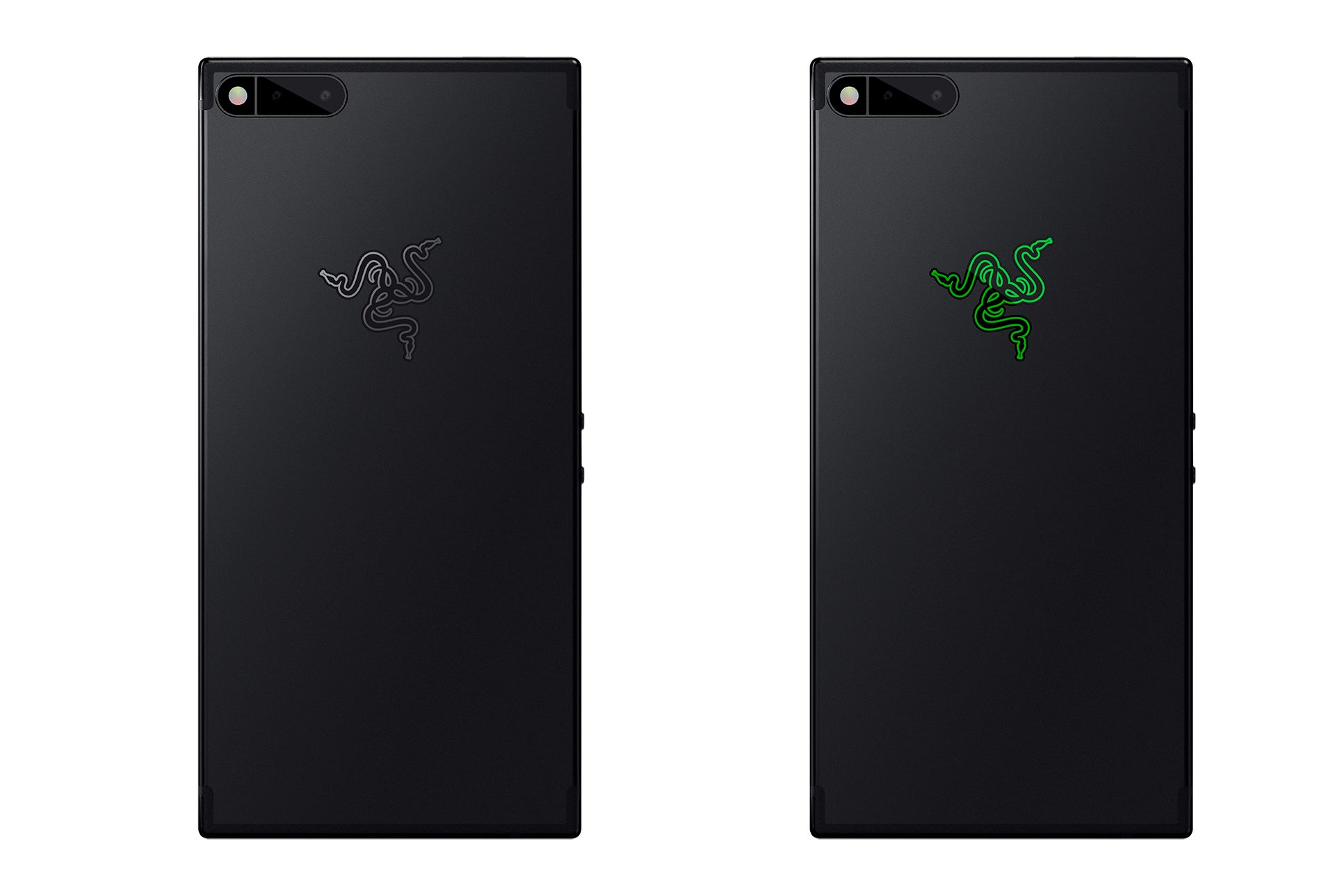
The back of this phone is also home to a three-snake Razer logo. That’s analogous to Apple’s simple Apple logo, and it’s placed in a similar location. The three-snake logo usually makes the products it adorns look like they’re from a different universe. Here they’re pressed into the metal, representing the cult element in the Razer persona like a secret symbol cut into an arm.


Display

The Razer Phone’s 120Hz IGZO LCD display is 5.7-inch diagonally. This display has 1440 x 2560 pixels across it, and it’s imbued with a lovely Wide Color Gamut (WCG). Over the face of this display is Corning Gorilla Glass 3 for full scratch and crack resistance.


The display we’re working with here is capable of a 120Hz refresh rate. This is the only phone in the world with this feature (outside Sharp Aquos phones, which aren’t widely available, nor aimed at games, really.) The iPhone X has 120Hz touch sampling, but not 120Hz refresh rate, while the iPad Pro (beyond the first model) DOES have 120Hz refresh rate. Apple calls their version of the tech “ProMotion.”


Image result for Razer Phone

A few apps that benefit from the ramped-up visuals in the Razer Phone so far include: Final Fantasy XV Pocket Edition, Gear.Club, Lineage 2: Revolution, Runescape, Old School RuneScape, Shadowgun Legends, Tekken, Titanfall: Assault, and World of Tanks Blitz. As you’ll find in the software section below, the benefits do not end there – settings allow the user to adjust the performance of the phone (and thereby its display) on an app-to-app basis.

Image result for Razer Phone

The display in this device is every bit a top-level performer. It’s not as eye-searing as a Samsung Galaxy S8 display – but it doesn’t need to be. The colors here are somewhere between the Google Pixel 2 XL (somewhat subdued) and the Galaxy S8 (far more intense than real life). As such, the Razer Phone has just about the most ideally balanced display in a smartphone today.

Software

Inside this Android device is Android. This is not the first Razer device to use Android – they’ve also released an Android TV device and have connected with Android devices with several wrist-bound accessories. The device runs Nova Launcher right out the box. Despite having a skin over the top, this device runs exceedingly swiftly.


Image result for Razer Phone

Because it runs Nova Launcher right out the box, there’s a litany of options for customization for the device’s homescreens and app drawer and basically everything else. This is the only device in the world, currently, that runs Nova Launcher as its only Home app.

Users can just as easily download any other homescreen replacement app if they do so wish, but know this – this is not just a simple app, and it cannot simply be deactivated. Not unless you download and activate a different homescreen replacement app, that is.


I wasn’t especially pleased to find a set of three games downloading right out the gate. I changed my mind once I realized that the games downloading were three of those that take full advantage of the devices implementation of a 120Hz refresh rate. Titanfall Assault, World of Tanks Blitz, and Gear.Club all begin to download as soon as the device connects to the web. Each can be deleted immediately if the user does so choose.

Perhaps the most excellent modification Razer’s made on this device is the Game Booster. This set of performance adjustments appears in the main phone Settings and provides users the ability to adjust optimizations on a per-game basis. Users can also add non-game apps to the list if they wish.


Each individual app can be adjusted with CPU clock, Resolution, Rame Rate, and Anti-aliasing. In this one unique section of the phones settings, you’ll find more PC-like controls than any other smartphone on the market today. These adjustments are absolutely invaluable for both gamers and any other sort of user.


If you’re going to be on a long commute (assuming you’re not driving) and you’d like to conserve battery as you play games – no problem. Turn down the CPU clock, resolution, and frame-rate to minimal. Want to play your favorite Android game with higher resolution and a smoother picture than on any other smartphone in the world? By all means, go ahead and do so.


Speakers

The front-facing speakers have the ability to get extremely loud. Once they’re up to maximum volume, the quality is on-par or better than any smartphone-based speakers I’ve ever experienced. These speakers get louder than is reasonable to listen to at a distance of several feet. It’s loud enough to hear across a dorm room or a moderately sized living room with ease.

There is no headphone jack in this device, which is a bummer. It’ll be a bummer until no more headphone jacks exist on any smartphone. To the credit of the designers of this phone, they’ve replaced the headphone jack with just about as good an accessory as they could have mustered. One cannot charge the phone at the same time as one uses the USB-C THX DAC Audio Adapter included in the box, but the quality makes up for the loss of functionality.

As far as my untrained non-audiophile ears can tell, the quality audio delivered with this DAC is just as good as any headphone jack’s delivered before. It might even be better.


Camera

Razer did not strive to put much of a spotlight on the camera on this device. If they had wanted the camera to shine, they’d have put more options in the camera software. As it stands, the camera only has very basic camera software features. The output is fair. Far better than the best cameras from a few years ago, and just as good as any high-end phone from late 2016 to early 2017.


Have a peek at the photos I’ve taken with the Razer Phone in the gallery above. Razer placed almost no emphasis on the quality of the camera in the device’s main listing online, so we’re not entirely surprised to find the camera lacking much detail. Photos don’t quite pop as much as photos from, for example, the Pixel 2, or the Galaxy S8.

For those users not purchasing the phone for its photography finesse, the quality of the camera will be more than enough for the random snap.

UPDATE: It would seem that Razer heard their cult calling for more camera quality – at least a little bit. Have a peek at this update post to see what’s changed so far.


Battery

The battery on this device is pretty gosh-darned good. If I use the device without a SIM card – that is, without mobile data – it lasts for days at a time. That’ll be a real winning element for those users that plan on purchasing this device as a sort of miniature gaming tablet.


For those that need that mobile data, no worries. This device has never run less than 12 hours for me from a full charge. A full day of work – or an airplane ride across the country – shouldn’t be an issue. This device has a 4000mAh lithium-ion battery and rolls with Qualcomm Quick Charge™ 4+. That means it’s ahead of the game, in a very good way.


Wrap-up


The hardware is up to snuff. The hardware here, without a doubt, is some of the finest work I’ve seen in the smartphone industry, and easily one of my favorites of the year. This is the part where I’d normally say “wait until they make their second phone,” but everything I’ve experienced so far says this first device is a real winner.

Razer recognized the best design and software elements in the original NextBit Robin device. Razer’s courage came in keeping those bits and pieces in a device that’s now a Razer at heart. This device isn’t the most extremely bright, nor the most massive, nor the phone with the biggest battery on the market. Razer knew they made a device that could have failed because of its lack of “new” features – but they released it anyway.